There is a quiet knowing that lives within women a deep, ancestral memory that cannot always be explained, yet is often felt. It stirs in moments of stillness, in circles of shared breath, in the gentle recognition of one another’s stories. It is the remembering of something ancient, something once woven into the fabric of community and life itself: the sacred passage of women through the seasons of becoming.
There was a time when a woman’s life was not measured solely by productivity or external success, but by her movement through these inner landscapes. She was held as she crossed thresholds, witnessed as she transformed, and honoured as she stepped into new identities. The young maiden, the mother, the crone, the wise woman, each phase not separate, but part of a continuous unfolding.
Somewhere along the way, we lost this thread.
Modern society, with all its advancements and noise, has drifted away from the quiet rituals that once anchored women in their transitions. The spaces where wisdom was shared, where stories were passed down from elder to younger, where emotions were not silenced but expressed freely, these spaces have become rare. And yet, the need for them has never been greater.
To speak of empowering women is not simply to speak of independence or strength in the traditional sense. It is to speak of remembrance. Of returning to a way of being where women are not expected to navigate life’s changes alone but are gently held within a community that understands the depth of those changes.
In the early stages of life, as a young woman begins to come into herself, there is often a sense of discovery, of identity, of body, of voice. Yet even here, the foundations of disconnection can begin. The world may encourage comparison over connection, performance over presence. Without guidance, without spaces to explore this transition safely, many young women learn to turn away from their inner voice rather than towards it.
Imagine instead a world where this stage is met with intention. Where young women are welcomed into circles that teach them not only about their physical bodies, but about their emotional and intuitive selves. Where menstruation is not hidden or shamed, but understood as a powerful rhythm, a connection to something cyclical and deeply rooted in nature.
These teachings were once commonplace. They were not extraordinary; they were simply part of life. As women move into motherhood, another profound transition occurs. It is one that is often spoken about in practical terms, pregnancy, birth, caregiving but far less in emotional or spiritual terms. And yet, to become a mother is to undergo a deep internal shift. It is a reconfiguration of identity, of priorities, of self.
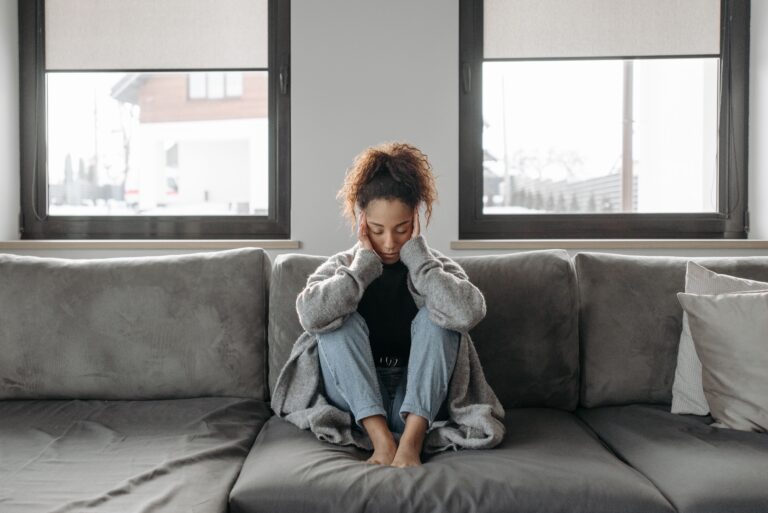
In many ways, motherhood asks a woman to hold space not only for her child, but for herself in a completely new way. It brings both immense love and, at times, quiet grief, the loss of who she once was, the uncertainty of who she is becoming. Without support, without spaces to process these feelings, many women carry this transition silently.
Women’s circles and meditation groups offer a return to something essential here. They create a space where nothing needs to be performed, where a woman can arrive exactly as she is, tired, overwhelmed, joyful, uncertain and be met with understanding. In these spaces, there is no need to have the answers. There is only the invitation to be present.
There is something profoundly healing about being witnessed. To be seen without judgement, to be heard without interruption, to sit in a circle where stories are shared and held with care, this is not a small thing. It is a restoration of something that has long been missing. In these moments, women begin to reconnect not only with others, but with themselves.
And then, there is the transition into the later stages of life, the phase often referred to as the crone, though this word has been misunderstood and, at times, diminished. In truth, this stage represents something deeply powerful: the emergence of the wise woman.
This is the woman who has lived. Who has experienced love and loss, growth and challenge. Who has navigated the complexities of life and, in doing so, has gathered a wealth of understanding that cannot be taught in books. This wisdom is not loud or forceful; it is quiet, grounded, and deeply intuitive.
And yet, in modern society, this stage is often overlooked. There is a cultural tendency to value youth over age, to celebrate beginnings while quietly ignoring endings. Women moving into this phase may find themselves feeling invisible, their voices less heard, their experiences less acknowledged. This is not because their value has diminished, but because the structures that once honoured this stage have faded.
In ancestral communities, the wise women were central figures. They were the storytellers, the healers, the guides. They held the knowledge of the land, of the body, of the cycles of life. They were the bridge between generations, passing down teachings that ensured continuity and connection. To lose this is to lose more than tradition, it is to lose a vital source of wisdom and yet, even in this loss, there is the potential for renewal.
The growing resurgence of women’s circles, meditation groups, and holistic spaces reflects a collective longing to reconnect with these ancient ways. It is not about recreating the past exactly as it was, but about integrating its essence into the present. It is about remembering that women are not meant to walk these paths alone.
Holding space becomes an act of quiet resistance in this context. It is a refusal to rush, to fix, or to silence. It is an offering of presence, a willingness to sit with another woman in whatever she is experiencing, without trying to change it. This kind of presence is deeply transformative.
In meditation groups, women are invited to turn inward, to listen to the subtle rhythms of their breath, to notice the sensations within their bodies. This practice of awareness creates space, space between thoughts, space between reactions, space for insight to emerge. Over time, this space becomes a place of refuge, a place where women can return to themselves.
In circles, the dynamic shifts from individual to collective. There is a shared energy, a sense of belonging that arises simply from being together. Stories are spoken, and in those stories, women recognise parts of themselves. The isolation begins to soften, replaced by connection.
There is a quiet magic in this. It does not come from elaborate rituals or grand gestures, but from the simplicity of presence. From the act of sitting together, breathing together, listening deeply. It is in these moments that the thread begins to reweave itself.
Empowering women, then, is not about giving them something they do not already have. It is about creating the conditions in which they can remember. Remember their strength, their intuition, their capacity for both softness and resilience.
It is also about honouring each stage of the journey equally. The young woman, with her curiosity and emerging sense of self. The mother, navigating the complexities of nurturing others while rediscovering herself. The wise woman, carrying the depth of experience and offering guidance to those who follow. Each phase holds its own beauty, its own challenges, its own gifts. None is more important than the other; all are necessary.
There is also a responsibility here, a gentle call to action. As women begin to reconnect with these spaces, there is an opportunity to pass this on. To share what has been learned, to hold space for others, to become part of the continuum of teaching and support.
This is how the thread is restored, not through force or urgency, but through small, intentional acts. Through gathering, through listening, through the courage to be present. Through the willingness to honour both the light and the shadow within ourselves and others, there is something deeply hopeful in this. Because while much has been lost, not everything is gone. The knowledge still exists, carried in fragments, in memories, in the quiet knowing that arises when women come together. It lives in the way a story resonates, in the comfort of shared silence, in the recognition that we are not alone.
Perhaps that is the essence of it all. To remember that we were never meant to walk this path in isolation. That there is strength in community, wisdom in experience, and healing in connection. That the journey from maiden to mother to wise woman is not something to be endured quietly, but something to be honoured, witnessed, and celebrated.
In returning to these practices, in creating and holding space, we begin to reclaim not only our own stories, but a collective legacy. One that speaks of compassion, of resilience, of deep and enduring wisdom.
And as this remembering unfolds, something shifts. The noise softens. The pressure eases. The sense of disconnection begins to dissolve, in its place, there is a quiet, steady presence—a knowing that we are part of something greater, something timeless. A lineage of women who have walked this path before us, and who, in their own way, continue to walk it alongside us.
This is the work. This is the remembering.
And in this remembering, there is profound peace.